Table of Contents
People ask us this all the time. Sometimes with genuine curiosity – they want the numbers, the breakdown, the honest picture. Sometimes with a kind of polite disbelief, like they’re trying to figure out if we’ve inherited something or just haven’t thought this through.
We get it. Five people. Three kids under six. No fixed address. It sounds expensive. It sounds like something other people do.
But here’s what we’ve actually found: full-time family travel, done intentionally, can cost less than the life we left behind. Not in every country, and not without effort – but in the places we’ve chosen and with the setup we’ve built, we are spending less than we were in the UK. And living better.
This post has real numbers in it. Not estimates. Not ‘it depends’. Actual figures from our current life, broken down so you can compare them to whatever you’re spending now. Because vague posts about ‘how we afford it’ are everywhere, and they never actually tell you anything useful.
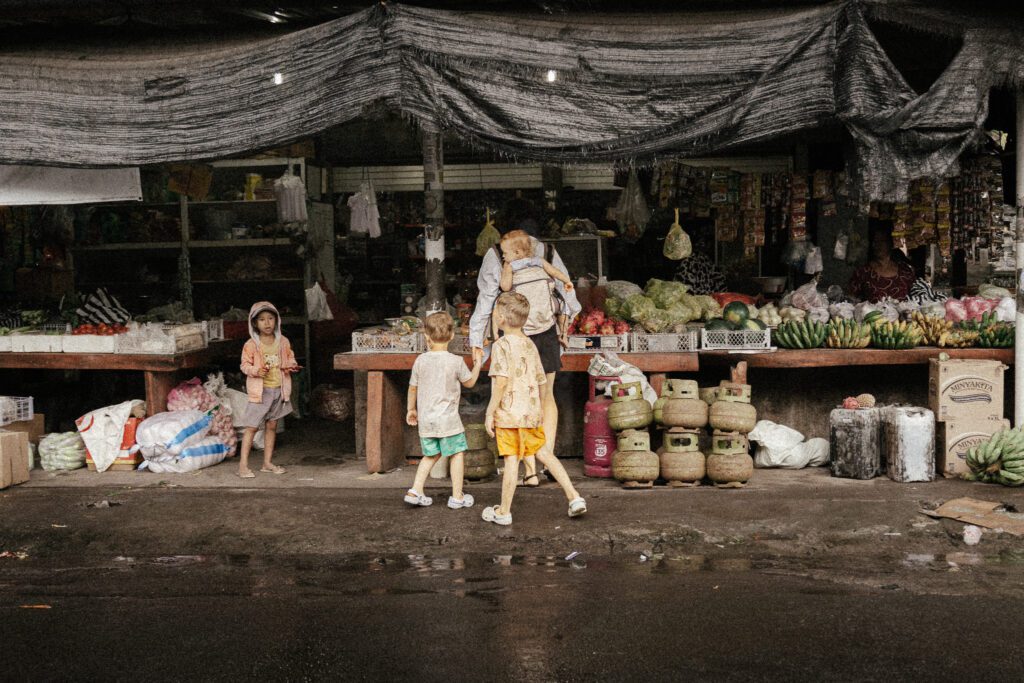
First: How We Afford Full-Time Family Travel / What Does It Actually Cost?
The honest answer is: it depends on where you are. A month in Bali or Kuala Lumpur looks nothing like a month in London, Barcelona, or anywhere in Western Europe. Location is the biggest lever in this entire equation, and most people seriously underestimate how far the difference goes.
For context: one nomadic couple reported spending $47,515 USD in 2024 – roughly $130 per day for two people. For a family of five in Southeast Asia, the numbers look different. Here’s our actual monthly breakdown based on our current base in Malaysia, which we’re sharing not because every family will match it, but because real numbers beat vague statements every time.
Our Current Monthly Costs (Malaysia/KL Base)
| Category | Monthly RM | Monthly £ | Monthly $ |
| Accommodation | 4,500 | 750 | 957 |
| Mobile (2 adults) | 110 | 18 | 23 |
| Travel Insurance (Safety Wing) | 1,200 | 200 | 255 |
| Shopping / groceries | 1,600 | 267 | 340 |
| Takeout meals | 600 | 100 | 128 |
| Transport (Grab/taxi) | 100 | 17 | 21 |
| Education / crafts | 60 | 10 | 13 |
| TOTAL | 8,170 | 1,362 | 1,737 |
| Per person | 1,634 | 227 | 347 |
That’s £1,362 per month for a family of five. £227 per person. That includes full accommodation, food, transport, insurance, and the kids’ learning materials.
On a comfortable month – more takeout, a few extra Grab rides, some activities – it edges up to around RM9,100 (£1,517). On a lean month it dips to around RM7,760 (£1,293). Either way, we’re sitting at roughly £260–£300 per person per month. That is genuinely efficient for a family of five.
One important note: this doesn’t include flights. Flights are separate, planned in advance, and we use various booking strategies and hacks to keep them as low as possible. But day-to-day living? That’s the table above.
Our accommodation is always the biggest line item. But with long stays – 28 nights or more – platforms like Airbnb offer discounts of up to 50-80% off nightly rates. A beautiful apartment in KL with a city skyline view, pools, and working spaces? Different price entirely to a month living with locals in Bali. Both are options.
INTERNAL LINK: A Month in Kuala Lumpur With Kids – The Honest Reality] and [INTERNAL LINK: A Month Living With Locals in Bali – What It’s Really Like for a Family].
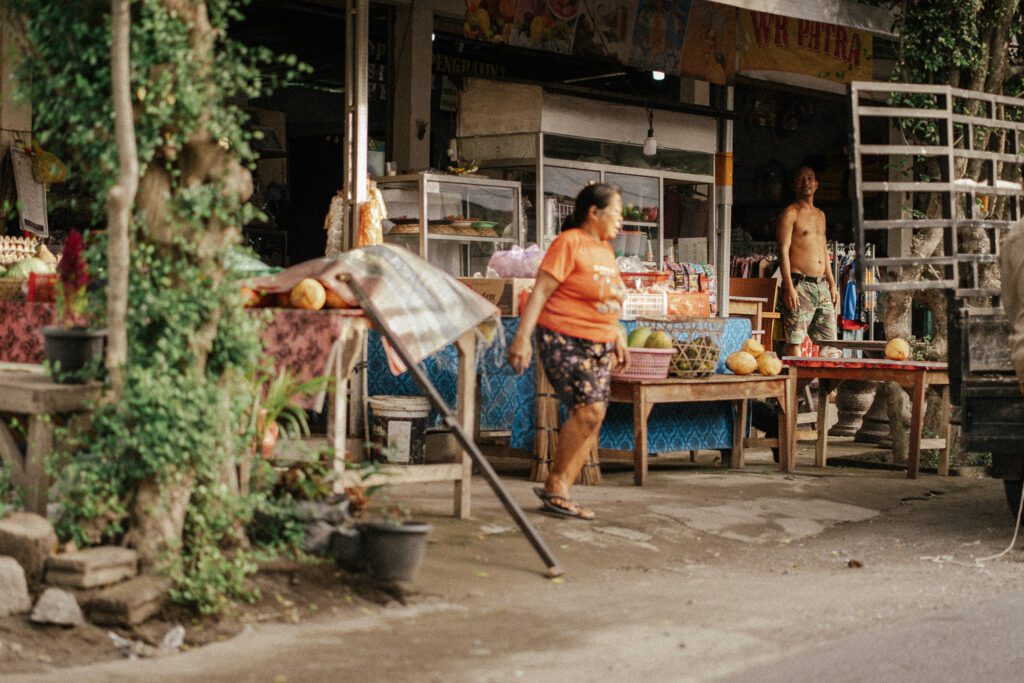
The Income That Makes It Possible
This is where people get curious – or sceptical. And we get it. So let’s be honest about how this actually started.
We both always had a passion for creating good photos. It started with a Sony camera we bought for a studio photography business. That slowly evolved – first capturing hikes and trips and everyday moments with the kids, then learning the basics of filmmaking alongside photography. We never stopped even when things were genuinely rough: chasing money, trying to keep everything afloat, paying mortgages, getting through pregnancy, postpartum, miscarriages. Nothing stopped us from building toward what we envisioned.
We kept self-teaching across every field that was already connected to what we loved. And over time, that investment became the foundation of how we earn on the road.
Our core income streams right now: blogs – ad revenue and affiliate income. YouTube, which is growing and will generate ad revenue alongside brand partnerships as it does. UGC work – creating cinematic content for hotels, travel brands, resorts, and tourism boards (this is the part of our work most people don’t see, and it’s where our strongest skills sit). Affiliate marketing from gear, accommodation, and tools we genuinely use. And digital products – travel and worldschooling guides that are in development. These are all on various platforms and accounts.
We’re not going to put exact income numbers in this post. What we will say is this: it didn’t happen overnight, it took years of work that wasn’t visible on social media, and it’s real. We’re not burning through savings. We’re building something. And every month it compounds a little more.
The Hungarian passport also helps more than people realise. Strong visa-free access across many countries means fewer visa costs, fewer bureaucratic headaches, and more flexibility in where we can go and how long we can stay. That’s not nothing.
How We Cut Costs Without Cutting the Experience
Slow travel is the single biggest financial decision we’ve made. Moving fast – a new city every few days – is exhausting and expensive. When we stay somewhere for a month or more, costs drop significantly. We find our local shop, our morning rhythm, our favourite spots. The kids settle. We actually live instead of constantly arriving.
Food is the other big one. As a plant-based family, we cook most of our meals at home. But we’ve found a balance that works: we try to keep a good routine to be productive at work and present with the kids, and cooking every meal from scratch doesn’t always fit that. So what we do is order a main dish and then buy most of our vegetables and fruit in larger orders and add them next to the takeout food. You get the convenience without the cost of five full restaurant meals.
Transport is where people waste the most money without realising. We don’t own a car. We use the metro for short city trips – for example three stations in KL cost us RM3.40. Even a taxi within the city centre runs RM5–6. We rent a car for longer day trips and exploration. In Bali we always have one fixed scooter on rent and occasionally rent another one or a car for bigger trips. Even with all of that, it comes out considerably cheaper than maintaining and insuring a car in the UK or any Western country.
Choosing the right bases matters enormously. Bali, Kuala Lumpur and lots of other Asian places offer a level of quality – warmth, fresh food, space, community- that would cost three or four times as much in Europe. You are the controller your own fate. Everything is possible with hard work and manifestation.
And then there’s the number nobody mentions: what we stopped paying when we left the UK. Removing a UK household removes an entire layer of fixed costs. Mortgage or rent. Council tax. Utilities. TV licence. Car insurance. Food and fuel at UK prices. For most UK families, that’s £2,000-£3,000 or more per month – just gone. When you compare that to our current monthly outgoings, the picture changes completely.
For a family of five with a mortgage, two cars, children’s activities, school costs, social life and a weekly food shop – you’re looking at well over £3,000 in the UK even on a conservative estimate, and that number only goes up. We’re spending less than half that.

What Changes Depending on Where You Are
One important thing the numbers above don’t capture: they are specific to each of our bases in Southeast Asia. Location changes everything in this lifestyle and understanding that is key to planning your own version of it.
Our accommodation in KL for example – a skyline-view apartment with pools and proper working spaces – costs a fraction of what the equivalent would cost in Europe. The same quality of life, the same comforts, the same amenities. At a third of the price. That is the simple calculation that makes full-time travel financially viable for families who choose their bases thoughtfully.
Bali is different again. Living with locals in a private villa with a garden costs far less than a comparable apartment in KL, but the infrastructure is different and the plant-based food options require a bit more hunting outside of the tourist areas. We’ve written about both in detail: [INTERNAL LINK: A Month in Kuala Lumpur With Kids – The Honest Reality] and [INTERNAL LINK: A Month Living With Locals in Bali – What It’s Really Like for a Family].
Europe is on a different page when it comes to costs. When we travel through Europe we spend considerably more – closer to the UK cost of living – and we budget for that accordingly. The year doesn’t have to be even. You can spend less in Southeast Asia, save a buffer, and use that to move through more expensive destinations without stress. That flexibility is one of the underrated advantages of this lifestyle.
The same principle applies to how you get around once you’re there. We don’t own a car. We use the metro for short trips within the city (three stations in KL costs RM3.40 – we’re not joking), Grab,Gojek or Didi in China for taxis (RM5–6 for a city centre ride), and we rent a car or scooter for longer day trips or exploration. In Bali we always have one fixed scooter on rent and add a second when needed. Total transport costs: a fraction of running and insuring a car in the UK.
What We Did Before We Left (The Financial Prep)
We didn’t just pack up and go. And we’d never tell anyone else to either.
We sold almost everything we owned in the UK before leaving. That gave us a starting point – but we wouldn’t encourage anyone to rely on that alone without a long-term income plan in place. One-off proceeds from selling your possessions aren’t a business model. They’re runway, and runway runs out.
For us, this was years in the making. Years of sweat, sacrifice, late nights, hard choices – all of it mostly invisible from the outside. We don’t share the full picture on social media, because not everything needs to be shared. But when people see us travelling and assume we got lucky, or that this happened easily, that’s the thing we most want to push back on. We prepared. We researched constantly. We made mistakes. We proved to ourselves how prepared we actually were. And we can’t wait to keep sharing more of that journey – the lows as well as the highs.
The practical pre-departure checklist, for anyone planning this:
- build a minimum three-to-six month (if not a year) emergency buffer before you leave.
- Establish at least one reliable income stream that is already producing real money – not a hope, not ‘in progress’, something actually earning.
- Sort travel health insurance for the whole family before you board. This is non-negotiable. We’ve had hospital visits already in the first six moths after leaving the UK to travel full time and it would have hurt our wallets if it wasn’t for our insurance. It’s the number one thing on our travel essentials list.
Read about which health travel insurance we chose for our family here.INTERNAL LINK
The Questions Everyone Asks (Our Honest Answers)
Do you need to be rich to do this?
No. Not even slightly. You need determination and a willingness to work hard. We didn’t come from money. Both of us left our home countries young – which taught us more about courage and not giving up than anything else ever has. When you find yourself alone in a new country and think about giving up – you either do or you don’t. We didn’t. We also drive each other. Having a true partner – someone who challenges you and motivates you when you need it – matters more than any amount of savings.
Can you do it on one income?
It depends what you mean by one income. A reliable remote salary is different to freelance that varies. The principle is: find at least one income stream that can sustain your travels, and don’t give up at the first obstacle. Build it up before you leave. It doesn’t have to be perfect,but remember hardships will come..more than you know it and your attitude will either make or break your success at this kind of lifestyle.
What about healthcare?
We as a ‘digital nomad family’,use SafetyWing. Having three little kids insurance is the number one thing on our essentials list. We treat it as a fixed cost, like accommodation. We’ve tested it in real situations and it’s given us complete peace of mind. You might thing it is pricey,but think about how pricey it would be if something serious happened to any of you and you would have to pay for everything from your own pocket. Now,then you would think “Why the heck did I not just paid for insurance”?!
In the UK, ‘free’ healthcare sometimes means waiting months for anything non-urgent, or going private and paying a lot. We’d argue our coverage costs less and delivers more for how we live now.
Do you need to sell your house?
No. Some families/people we talked to with similar lifestyle put their homes on Airbnb to cover the mortgage and often generate income on top. We chose not to – we wanted to be completely free of extra weight and focus entirely on the work and the family for a while. That was the right choice for us. It might not be for everyone.
Are you burning through savings?
No. The income is real and it’s growing. But we’re also careful. The goal was never to spend our way through a pot of money and come home when it ran out. That’s a holiday, not a life. The goal is a sustainable business and a life we can keep building.
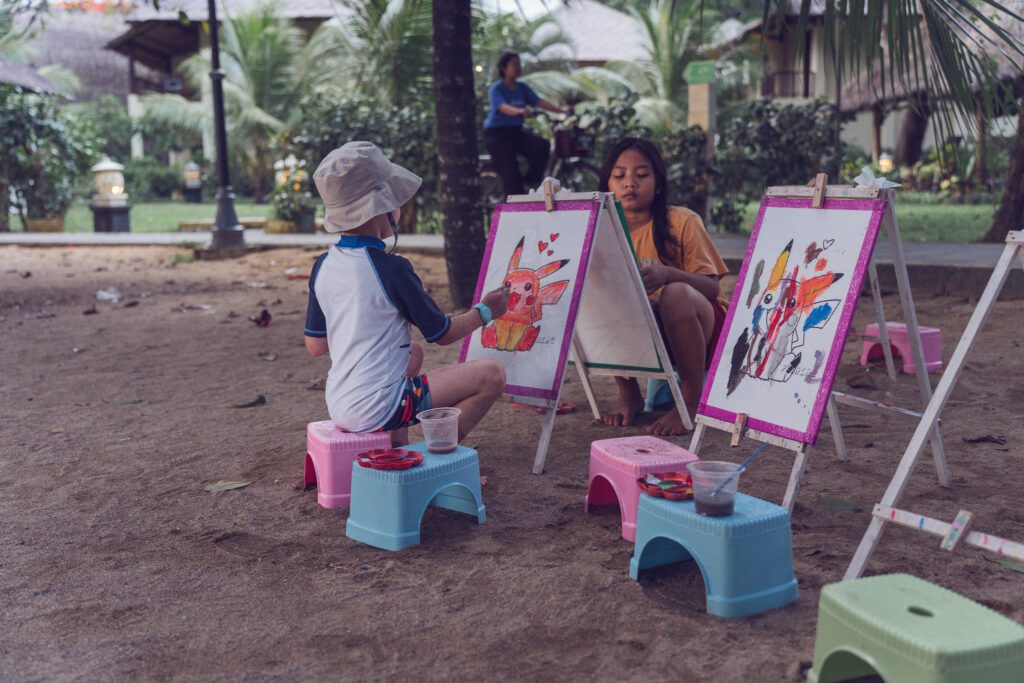
Family Verdict – Is Full-Time Travel Actually Affordable?
Yes. Absolutely. With the right setup, in the right places, and with at least one real income stream in place – full-time family travel is not only affordable, it can be significantly cheaper than staying put.
Who this works for: families or just individuals willing to build location-independent income, embrace slow travel, live in cost-effective destinations, and get genuinely comfortable with uncertainty. It’s not always smooth. But the financial pressure is not what people expect it to be – especially once you remove the fixed costs of a Western lifestyle. Also,if this is something you really really want,you CAN make it work.
Who should wait: anyone leaving without a real income plan. Savings alone will run out. The lifestyle needs income to sustain it. Build that first, even imperfectly, before you leave. That said,i believe in manifestation,anything you can see,you can make a reality,so don’t run from the opportunities either,big things comes with a leap of faith
If i were given the chance to talk to my past self i would say: start building the income sooner. Not later. Not ‘when things settle down.’ Alongside the chaos, through the hard periods, keep building. The compound effect of consistent effort over time is what makes this possible. We’re living proof.
If you’re at the beginning of figuring this out – read How We Became a Full-Time Travel Family With Three Kids and Our Honest Thoughts On Travelling With Kids next. That’s where this whole thing actually started.